What Building A Real System Actually Looks Like
There is no shortage of advice in the startup world.
Every day, founders and teams are told:
How to start a company
What mistakes to avoid
How to acquire more customers
How to scale faster and avoid failure
These insights can be valuable. But they often share one common limitation:
They simplify something that is inherently complex.
The Gap Between Advice and Reality
In practice, building a company—or any meaningful system—is rarely linear.
It involves:
Uncertainty
Iteration
Setbacks
Long-term decision making
Yet today’s narrative often emphasizes speed:
Fast growth
Fast returns
Fast exits
This creates an expectation that success should happen quickly—and if it doesn’t, something must be wrong.
A Different Perspective on Progress
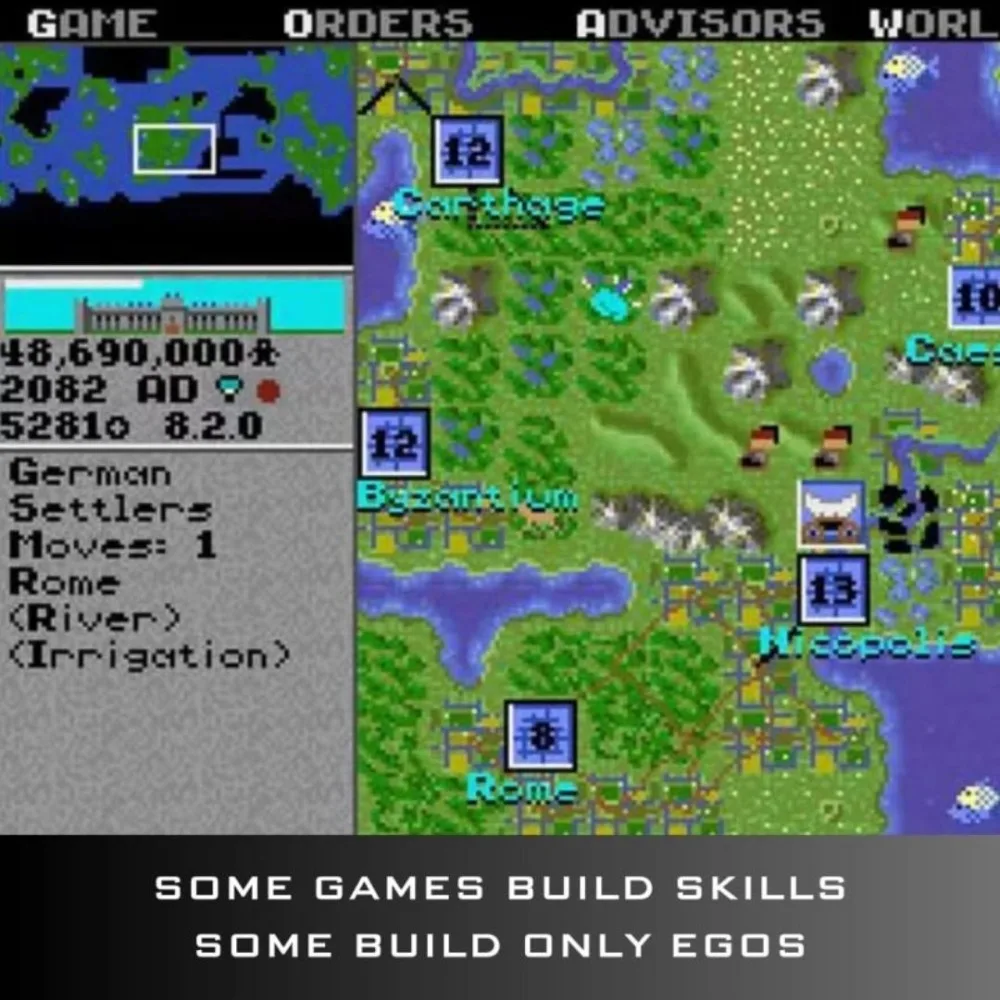
Long before modern startup culture, there were environments that simulated complexity, strategy, and long-term thinking in a very different way.
One example is popular strategy games.
At its core, it is a system where:
Progress happens step by step
Resources must be managed carefully
Decisions have long-term consequences
Balance is essential
You begin with almost nothing and gradually build toward something complex and sustainable.
Lessons That Translate Beyond the Game
When examined closely, the principles behind such systems reflect real-world challenges:
Building from scratch requires patience
Failure is part of the process—not the end of it
Rebuilding is often necessary for progress
Technology and innovation drive advancement
Short-term wins must be balanced with long-term strategy
People—teams and customers—are central to success
Every decision carries consequences
And perhaps most importantly:
Meaningful progress takes time.
Rethinking “Success”
The idea that a company should be built and exited within a few years has become increasingly common.
While it does happen in some cases, it is far from the norm.
More importantly, it raises a fundamental question:
Is the goal speed—or sustainability?
Because the two rarely move at the same pace.
Building for the Long Term
Organizations that endure tend to share common traits:
They invest in strong foundations
They embrace complexity instead of avoiding it
They prioritize consistency over shortcuts
They think in years—not quarters
They don’t rely on instant results. They build systems that evolve.
A Final Thought
Not every experience develops real capability.
Some create depth, resilience, and strategic thinking. Others create only the illusion of progress.
The difference matters—especially when building something that is meant to last.
Ready to see real G-code (NC Program) simulation in action?
Book a personalized demo of MANUSsim for your specific machines.