
Don’t Trust the Label, Check the Ingredients
🍦 “100% Natural Ice Cream!” That’s what the glossy label on the counter says. It looks perfect, appetizing, and completely genuine. But if you step behind the counter and look at the actual inventory, the reality changes.
🧪 Emulsifiers. Stabilizers. Artificial flavors. Chemical junk.
The packaging promised you something pure, but the actual ingredients tell a completely different story. It looks clean on the outside, but it is anything but natural.
The Artificial Flavor of CAM Previews
This ice cream analogy is exactly how the manufacturing industry has approached CNC simulation for decades. Most CAM systems on the market provide a smooth, shiny, and visually beautiful animation of your toolpaths. They slap a "simulation" label on it and assure you that your setup is safe.
But if you look behind the scenes, you find that the confidence they are selling you is entirely artificial:
No Real G-Code: The internal preview isn't reading the actual G-code your machine tool runs; it is simulating an idealized internal toolpath.
No Real CNC Behavior: It completely ignores machine-specific macro behaviors, controller acceleration, and exact kinematics.
No Real Trust: Because the simulation is artificial, it creates a polished illusion of safety while leaving the actual risk completely hidden.
Just like buying ice cream packed with hidden ingredients, relying on a standard CAM preview gives you fake confidence. You are left guessing and crossing your fingers when you finally press "Cycle Start" on a million-dollar machine tool.
Demanding Real Ingredients on the Shop Floor
In a modern production environment, "artificial" isn't good enough. If a simulation tool doesn't read the exact code that your CNC controller executes, it isn't verifying your work—it is just animating a guess.
True operational safety requires moving away from the artificial and demanding real ingredients:
Actual G-Code Verification: A real simulation must analyze the exact post-processed G-code file. What you see on the digital twin must be an absolute reflection of what will happen on the physical machine.
True Machine Behavior: The software must account for the unique quirks, syntax, and limits of your specific CNC controller, eliminating the risk of unexpected movements or catastrophic crashes.
Uncompromising Trust: When you eliminate the gap between the software preview and the machine language, fake confidence is replaced by real, data-driven trust.
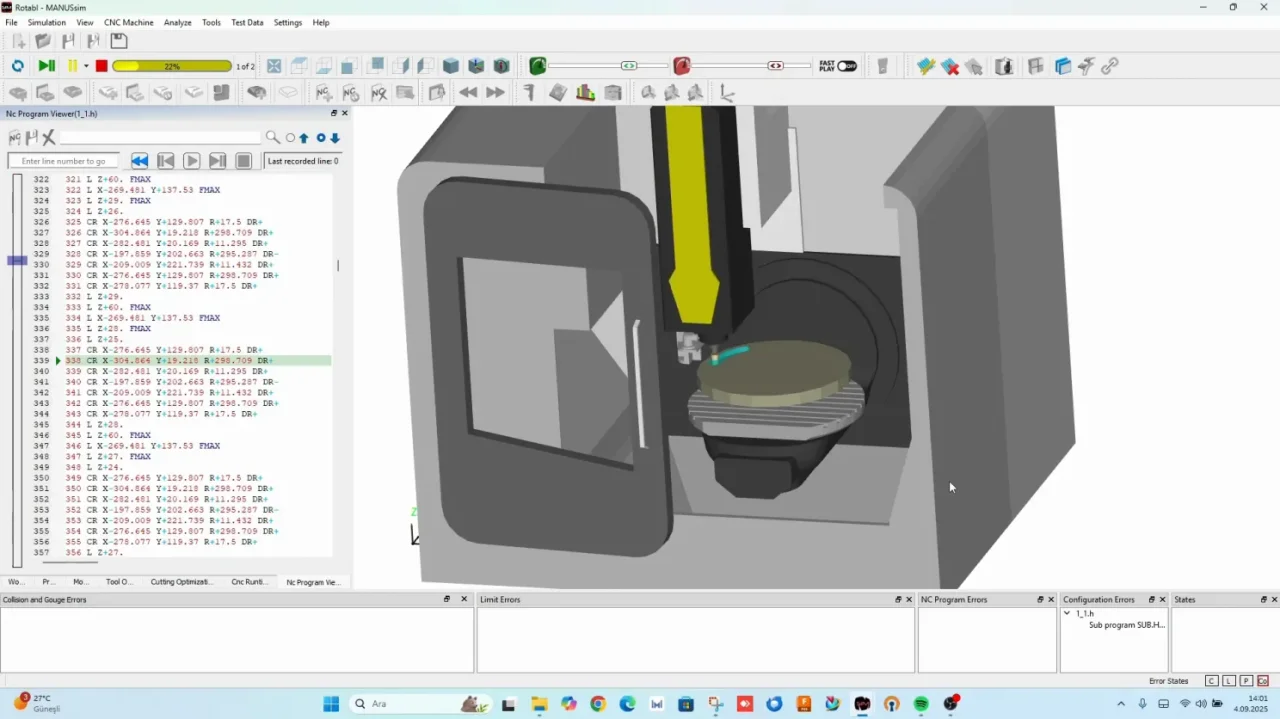
Beyond Safety: Optimizing the Recipe
When a simulation platform operates on real G-code, it unlocks an entirely new layer of capability: simultaneous optimization.
Verifying the code line-by-line means you don't just protect the machine from a crash; you can actively refine the entire production recipe with a single click:
⚡ Eliminating Air-Cuts: Identifying and cutting out wasted motion where the tool is simply cutting air.
⏱️ Reducing Cycle Time: Streamlining feedrates and transitions to shave valuable seconds off every single part.
💰 Protecting Profit Margins: Minimizing unnecessary machine wear, saving energy, and dramatically extending tool life.
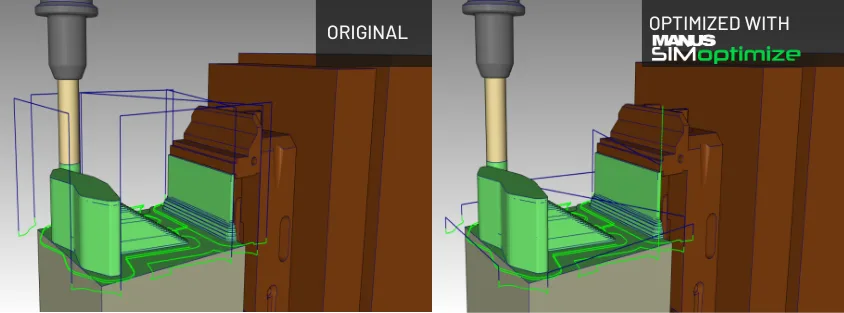
Stop Settling for the Illusion
The manufacturing world has spent too long accepting the "giants" and their polished, artificial marketing labels. A beautiful animation doesn't protect your spindle, your fixtures, or your operators—real, G-code-driven simulation does.
Next time you review your design-to-manufacturing workflow, don't just trust the label on your software package. Check the ingredients.
Are you ready to swap artificial previews for real machine behavior? Discover how to protect and optimize your production using your actual G-code at www.manusnc.com.
Ready to see real G-code (NC Program) simulation in action?
Book a personalized demo of MANUSsim for your specific machines.