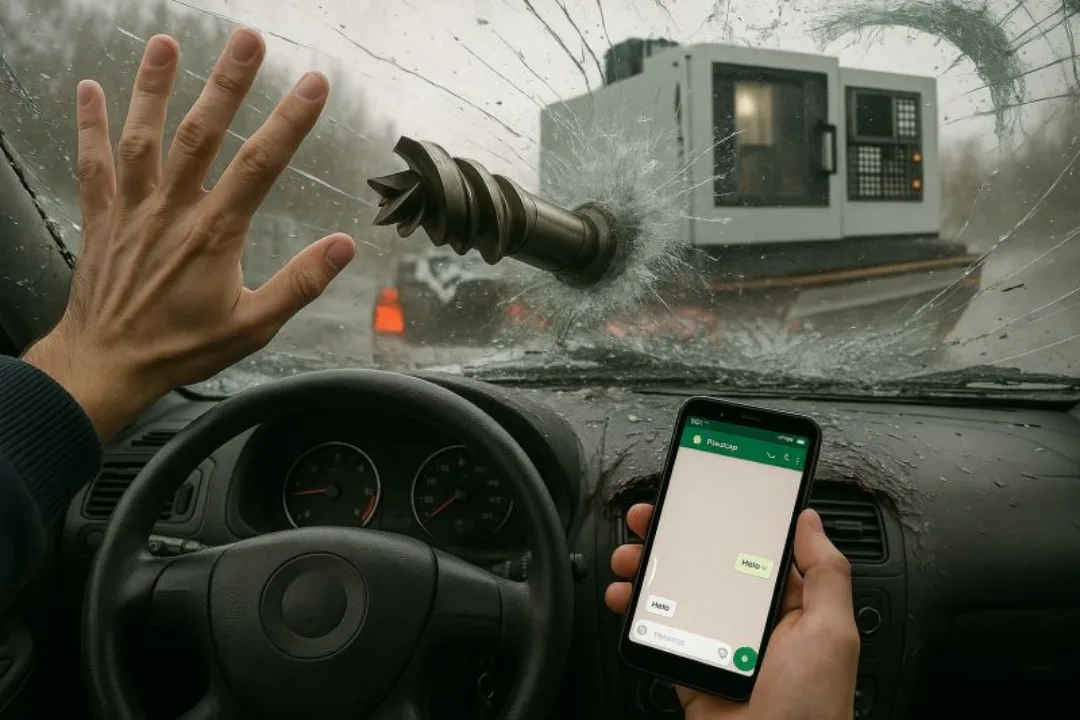
Why G-Code Simulation Matters More Than You Think
“How many drivers using their phone actually cause accidents?”
Very few. Maybe less than 1%.
So… does that mean using a phone while driving isn’t dangerous?
🚫 Of course not. That’s simply the wrong question.
The right question is:
“Among drivers who did cause accidents — how many were using their phone at the time?”
That’s where real risk analysis begins. And once you ask the right question, the truth becomes impossible to ignore.
The Same Mistake Happens in CNC Manufacturing
People often say:
“We rarely have serious collisions. So we don’t need G-code simulation.”
But that’s the same flawed logic.
We should not be measuring the frequency of accidents — we should be analyzing the conditions under which accidents do happen.
The correct question is:
**“When we had a crash, broken tool, wrong feature, or scrapped part…
was the actual G-code ever simulated?”**
And the answer, in most shops, is almost always:
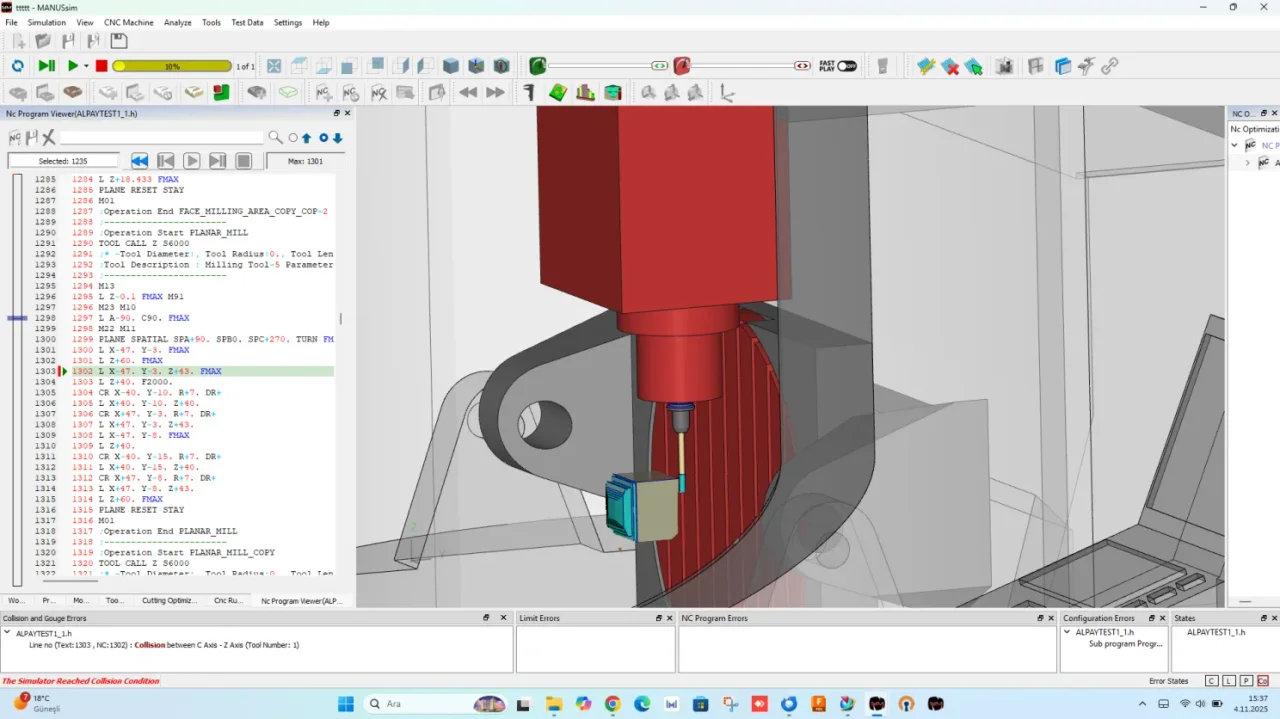
❌ No. CAM simulation was used — but the real G-code that the CNC machine executes was never verified.
That gap between intended toolpath and actual machine behavior is where costly surprises hide.
CAM Simulation ≠ G-Code Simulation
CAM systems show what should happen. But CNC machines don’t run CAM toolpaths.
They run G-code — and this is where differences, errors, and misunderstandings can turn into:
⚠ CNC axis limit violations
⚠ Incorrect movements or tool orientations
⚠ Feedrate errors from post-processor mismatches
⚠ Collisions invisible in CAM animation
⚠ Broken tools, damaged fixtures, scrapped parts
⚠ And sometimes… damaged machine components
It’s a bit like texting while driving:
📅 Most days, nothing happens. 💥 Until the day something does.
And by then, it’s too late to react.
G-Code Simulation Is Your Seatbelt
You don’t buckle up because you expect an accident on every trip.
You buckle up because if an accident does happen, your protection needs to be in place before the impact.
G-code simulation plays that same role in CNC machining.
It reveals the real behavior of the machine.
It validates what will truly happen when you press Cycle Start.
It prevents the expensive mistakes that only show up on the shop floor.
You may not need it every day — but when you do, it’s the only thing standing between you and a very expensive crash.
Conclusion: Ask the Right Question
The discussion should never be:
“How often do we crash?”
Instead, it must be:
“Are we verifying the G-code that actually runs our machines?”
Because in CNC manufacturing — just like on the road — safety isn’t about frequency. It’s about consequences.
Ready to see real G-code (NC Program) simulation in action?
Book a personalized demo of MANUSsim for your specific machines.