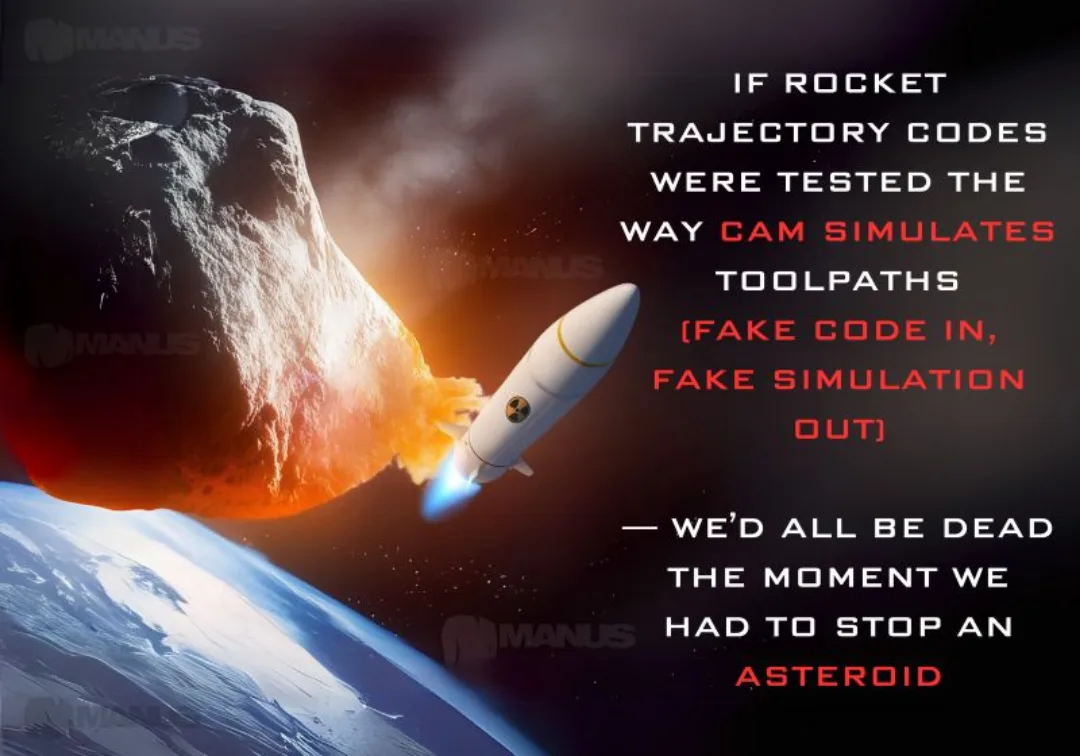
What Rocket Science Can Teach Us About CNC Simulation
Imagine testing a rocket’s trajectory the same way most CAM systems simulate toolpaths.
Everything looks perfect on the screen. The path is smooth. There are no warnings.
Then the rocket launches… and suddenly the real world takes over.
If rocket engineers relied on simplified visualizations instead of the real trajectory code, the results would be catastrophic. In fact, if we tested asteroid-defense rockets this way, we probably wouldn’t survive the first attempt.
And yet, in CNC manufacturing, something very similar happens every day.
The Hidden Gap in Traditional CAM Simulation
CAM systems are excellent at generating toolpaths and visualizing machining strategies. But when it comes to simulation, most CAM environments are not actually simulating what the CNC machine will execute.
Instead, they visualize a theoretical toolpath.
What the machine actually runs is something else entirely: G-code.
Between the CAM toolpath and the final NC program, several steps happen:
Post-processing converts the toolpath into machine-specific G-code
Controller logic interprets that code
Machine kinematics affect the real motion
Sequencing, modal states, and machine limits come into play
The result?
A toolpath that looks flawless inside CAM can still produce problems once it reaches the CNC machine.
That’s when manufacturers start encountering issues such as:
unexpected machine motions
collisions or near misses
axis limit violations
sequencing errors
faulty rapid movements
costly machine downtime
In short: when the simulation isn’t based on real G-code, the results may not fully reflect real machine behavior.
Why G-Code Level Simulation Matters
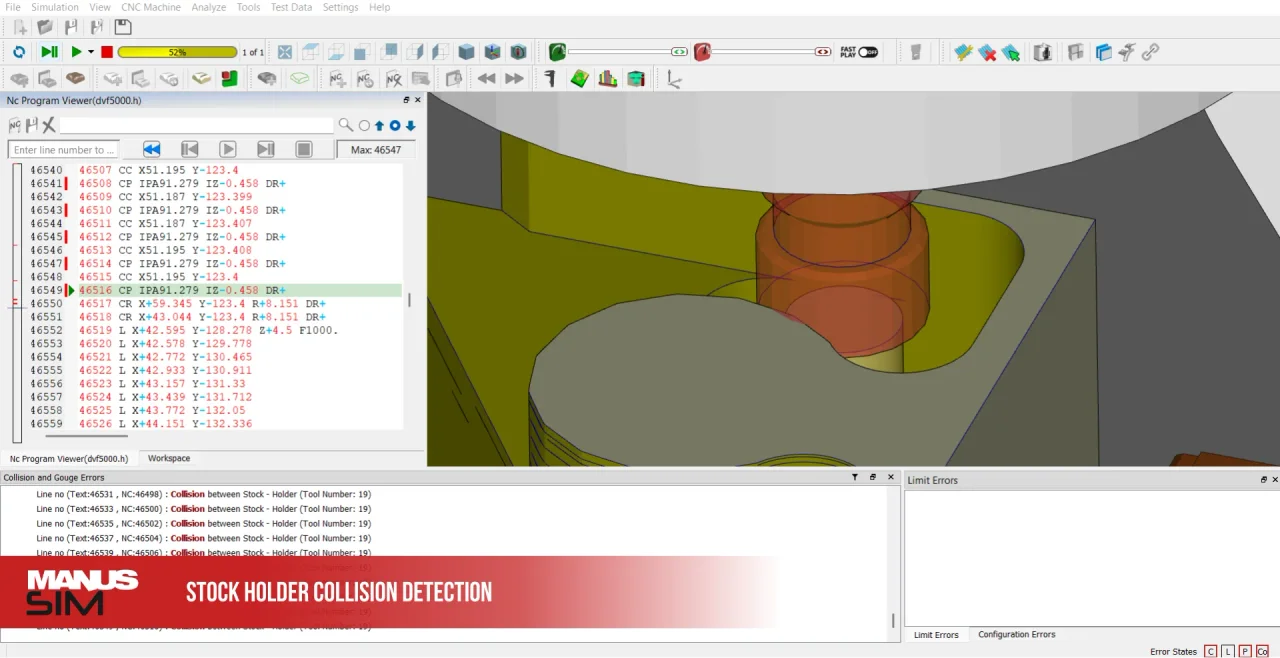
This gap between CAM visualization and machine execution is exactly why we built #MANUSsim.
MANUSsim simulates CNC programs the same way machines execute them — directly from the real G-code, not from CAM previews.
That means the simulation reflects what truly matters on the shop floor.
Instead of assumptions, the system evaluates:
the actual NC program
controller logic
real machine movements
machine limits and sequencing
The result is a simulation environment that removes the disconnect between programming and execution.
No surprises. No guesswork. Just accurate validation before the program reaches the machine.
Verification Is Only the First Step
Detecting problems early is essential — but modern manufacturing requires more than just verification.
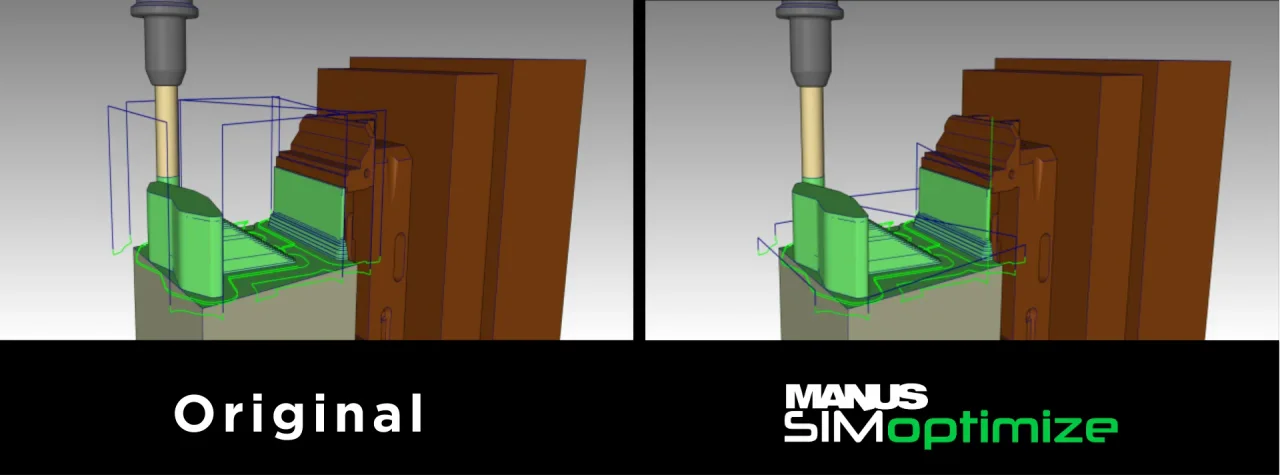
That’s where #MANUSsimOptimize comes in.
Beyond validating the NC code, it analyzes the program and optimizes the G-code itself.
This leads to measurable improvements such as:
shorter cycle times
reduced machine idle movements
lower energy consumption
smoother and more efficient machine motion
The part program remains the same. The machine remains the same. But the execution becomes faster, safer, and more efficient.
It’s similar to optimizing a rocket’s trajectory: the destination doesn’t change, but the path becomes smarter and more efficient.
The Reality of Modern CNC Manufacturing
Manufacturing today operates under intense pressure:
tighter delivery schedules
rising energy costs
increasing machine utilization demands
higher expectations for precision and reliability
Under these conditions, relying on simplified simulation models is no longer enough.
What matters is not what looks correct in a CAM preview — but what the machine will actually execute.
Because in CNC manufacturing, just like in rocket science, reality always wins.
And simulation should reflect exactly that.
Ready to see real G-code (NC Program) simulation in action?
Book a personalized demo of MANUSsim for your specific machines.