
Optimized Too Late: The Hidden Threat Inside Every CNC Shop
In many CNC shops, problems rarely appear with alarms or dramatic failures. They grow quietly, hidden behind machines that seem to run well enough and production schedules that look stable on paper. Parts ship, customers stay reasonably satisfied, and everything feels under control.
So when someone casually asks, “Do you optimize your G-codes?”, the usual answer comes quickly: “Our CAM handles that.”
And in a sense, it does. But CAM handles toolpaths — not performance.
That difference is exactly where profit begins to leak away unnoticed.
CAM-generated G-code often contains small inefficiencies that no one catches early on:
tiny pockets of air-cutting that repeat hundreds of times per cycle,
retract motions that happen more often than the job actually requires,
overly conservative feedrates that ignore what’s really happening at the cutting edge,
motion sequences that look neat on a preview but accumulate wasted seconds in real machining.
Individually, they seem harmless. Together, they slowly reshape a shop’s competitiveness.
One shop, for example, ran 100 identical parts at 41 minutes each. Meanwhile, competitors — using the same class of machines, similar tooling, and similar operators — produced the same job in 32 minutes.
They didn’t achieve this by:
buying newer machines,
hiring more programmers,
rewriting their CAM workflow,
or pushing operators harder.
They simply ran better-optimized G-code.
And the cost of not optimizing wasn’t immediate. It surfaced gradually, in the form of:
longer cycle times,
tighter margins,
slower quoting response,
and lower machine availability.
By the time the impact became visible, the gap had already widened — quietly, consistently, and avoidably.
This is exactly why MANUSsim Optimize was built. Instead of rewriting CAM strategies or manually editing code, it focuses on what truly matters: the G-code your machine actually runs.
It automatically:
analyzes the real motion and feed behavior inside the G-code,
detects air-cutting and non-productive moves,
assigns faster feedrates where safe and effective,
and outputs clean, optimized programs without altering your CAM source.
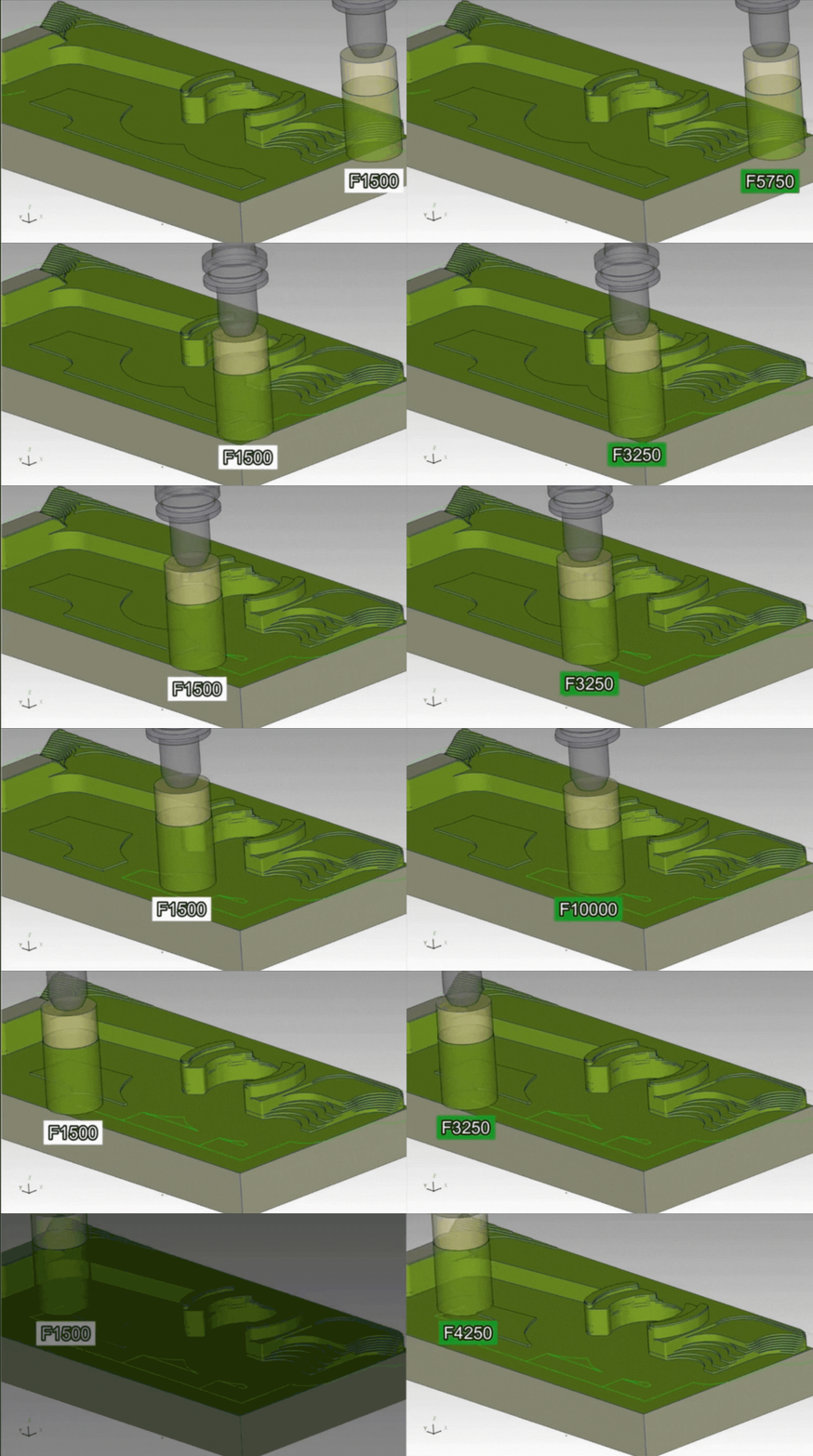
No workflow changes. No extra complexity. No special expertise required.
Just measurable, reliable cycle-time reduction — the kind that restores competitiveness before inefficiencies become irreversible.
Because in CNC manufacturing, the moment a shop says “We’ll optimize later,” someone else is already optimizing today.
Ready to see real G-code (NC Program) simulation in action?
Book a personalized demo of MANUSsim for your specific machines.